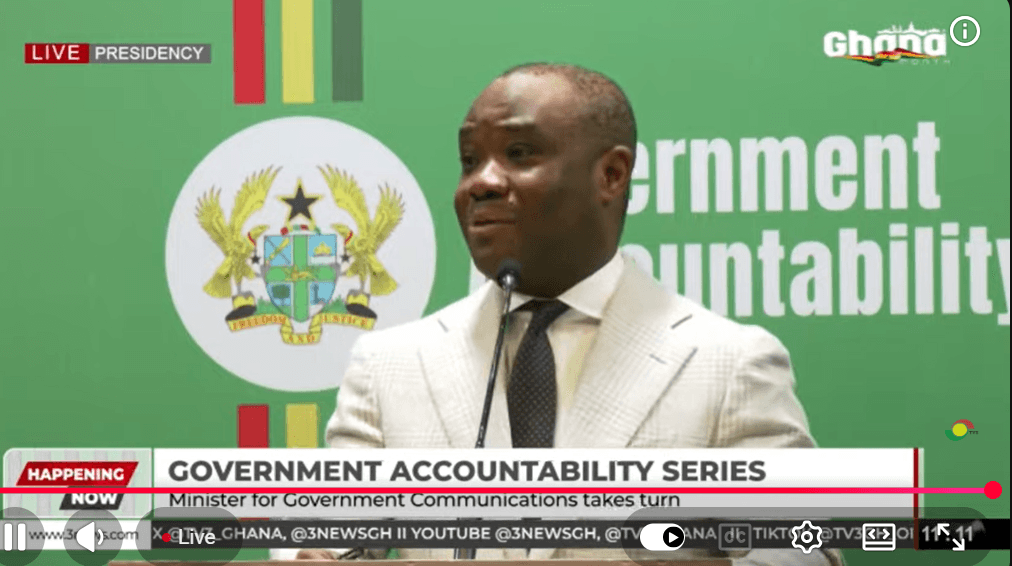
The Minister of Government Communications, Felix Kwakye Ofosu, made the announcement, providing a measure of clarity on the progress of the Committee's work. According to Ofosu, the Committee's completion of the review underscores the government's commitment to upholding the principles of fairness and equity in public service appointments. While the details of the review's findings have not been made public, observers expect that the Committee's report will shed light on the extent to which these appointments were based on merit, and whether any irregularities or improprieties were identified. This, in turn, could have significant implications for the affected individuals and the broader public service landscape.
Context and Significance
The establishment of the Committee and its review of post-election public service appointments are set against the backdrop of concerns about the politicization of the public service. In the aftermath of elections, it is not uncommon for incoming administrations to make appointments that are perceived as being motivated by political considerations rather than strict merit. This phenomenon can undermine the professionalism and impartiality of the public service, potentially compromising its ability to deliver effective and efficient services to the public. By initiating this review, the Chief of Staff has taken a proactive step towards addressing these concerns and restoring public trust in the appointment process.
"The completion of the Committee's review is a welcome development, as it demonstrates the government's willingness to subject its actions to scrutiny and ensure that public service appointments are made on the basis of merit and competence," said Dr. Ama Pomaa, a public policy analyst at the University of Ghana. "However, the real test will be in the implementation of the Committee's recommendations and the government's commitment to transparency and accountability in the public service."
Expert Insights and Anticipated Outcomes
Experts and observers are eagerly anticipating the release of the Committee's report, which is expected to provide detailed insights into the review's findings and recommendations. Some have speculated that the report may identify instances of irregularities or improprieties in the appointment process, potentially leading to the reversal of certain appointments or further investigation. Others have emphasized the importance of the Committee's work in promoting a culture of transparency and accountability within the public service. According to Professor Kwame Addo, a governance expert at the Ghana Institute of Management and Public Administration, "The Committee's review is an essential step towards promoting good governance and ensuring that the public service is managed in a manner that is consistent with the principles of fairness, equity, and merit."
As the government prepares to release the Committee's report, stakeholders are watching with keen interest to see how the findings and recommendations will be implemented. The outcome of this process is likely to have significant implications for the public service, and potentially, the broader political landscape. While some may view the review as a necessary exercise in accountability, others may see it as an opportunity for political maneuvering or score-settling. Ultimately, the success of this initiative will depend on the government's commitment to transparency, accountability, and the principles of good governance.
Conclusion and Future Directions
In conclusion, the completion of the Committee's review of 2,080 post-election public service appointments marks an important milestone in the government's efforts to promote transparency and accountability in the public sector. As the nation awaits the release of the Committee's report, it is clear that the outcome of this process will have far-reaching implications for the public service and the broader governance landscape. By prioritizing merit, fairness, and equity in public service appointments, the government can help to restore public trust, promote professionalism, and ensure that the public service is equipped to deliver effective and efficient services to the public. The future of this initiative will depend on the government's commitment to implementing the Committee's recommendations and upholding the principles of good governance.