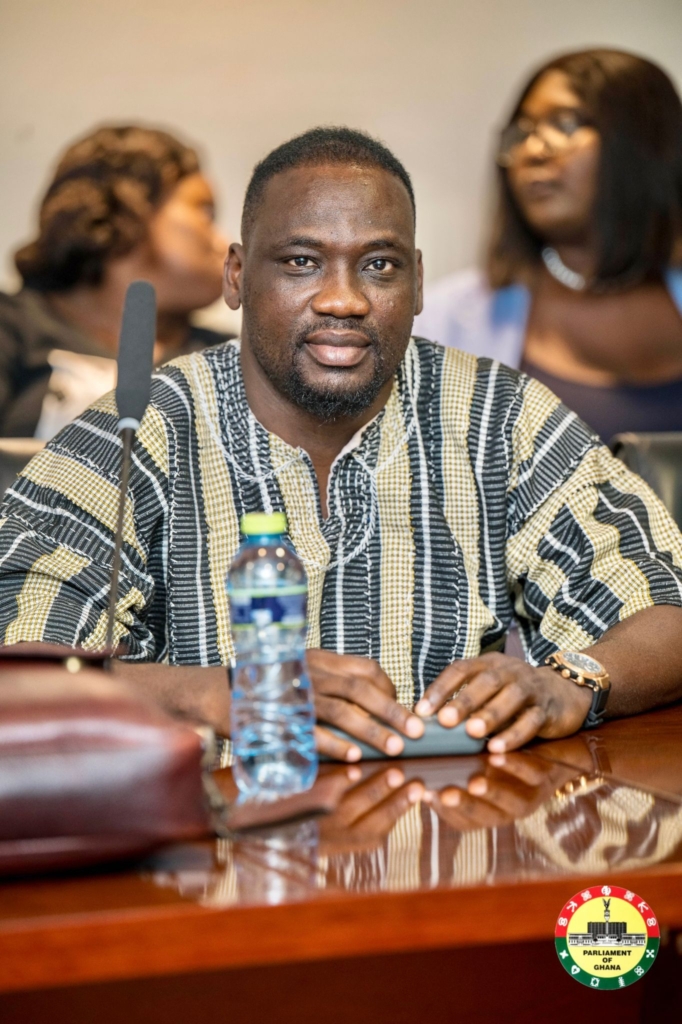
In a move aimed at promoting transparency and accountability in Ghana's political landscape, the Member of Parliament for Asante Akim North, Ohene Kwame Frimpong, has initiated a private member's bill seeking to amend the country's Political Parties Act, 2000 (Act 574). The proposed amendment introduces a comprehensive campaign financing regime, which is expected to regulate the flow of funds into political parties and their activities. This development is seen as a significant step towards addressing the long-standing concerns over the lack of transparency in campaign financing in Ghana.
The bill, which is currently before parliament, aims to establish a framework for the disclosure of campaign finances, including the sources and amounts of funds received by political parties. This move is anticipated to help curb the influence of money in politics and promote a level playing field for all political parties. According to experts, the lack of regulation in campaign financing has created an environment where wealthy individuals and organizations can exert undue influence over political parties, thereby undermining the democratic process.
Background and Context
The Political Parties Act, 2000 (Act 574) has been in existence for over two decades, but it does not provide adequate provisions for the regulation of campaign financing. The act primarily focuses on the registration and regulation of political parties, without addressing the critical issue of campaign financing. As a result, political parties in Ghana have been left to operate without a clear framework for managing campaign finances, leading to concerns over corruption and abuse of power. The proposed amendment seeks to address this gap by introducing a comprehensive regime for campaign financing.
According to Ohene Kwame Frimpong, the sponsor of the bill,
"the lack of regulation in campaign financing has created a system where political parties are forced to rely on wealthy donors, who often expect favors in return. This undermines the integrity of our democratic process and creates an uneven playing field for political parties."He emphasized that the proposed amendment is aimed at promoting transparency and accountability in campaign financing, thereby strengthening Ghana's democratic institutions.
Expert Opinions
Experts have welcomed the proposed amendment, describing it as a significant step towards promoting transparency and accountability in Ghana's political landscape. Dr. Kwame Asah-Asante, a political analyst at the University of Ghana, noted that
"the regulation of campaign financing is essential for promoting a level playing field for all political parties. It will help to prevent the abuse of power and promote transparency in political party financing."He emphasized that the proposed amendment is a critical step towards addressing the long-standing concerns over corruption and abuse of power in Ghana's political system.
Mr. Kofi Addo, a civil society activist, also commended the initiative, stating that
"the proposed amendment is a significant step towards promoting transparency and accountability in campaign financing. It will help to prevent the influence of money in politics and promote a more level playing field for all political parties."He noted that the regulation of campaign financing is essential for promoting good governance and accountability in Ghana's political system.
Implications and Future Prospects
The proposed amendment has significant implications for Ghana's political landscape. If passed, it will introduce a new era of transparency and accountability in campaign financing, promoting a level playing field for all political parties. The regulation of campaign financing will also help to prevent the abuse of power and promote good governance in Ghana's political system. According to experts, the proposed amendment is a critical step towards promoting democratic consolidation and stability in Ghana.
In conclusion, the proposed amendment to the Political Parties Act, 2000 (Act 574) is a significant step towards promoting transparency and accountability in campaign financing in Ghana. The regulation of campaign financing is essential for promoting a level playing field for all political parties and preventing the influence of money in politics. As the bill makes its way through parliament, it is expected that it will receive widespread support from civil society organizations, political parties, and other stakeholders who are committed to promoting good governance and accountability in Ghana's political system. With the proposed amendment, Ghana is poised to take a significant step towards promoting democratic consolidation and stability, and it will be interesting to see how this development unfolds in the coming months.