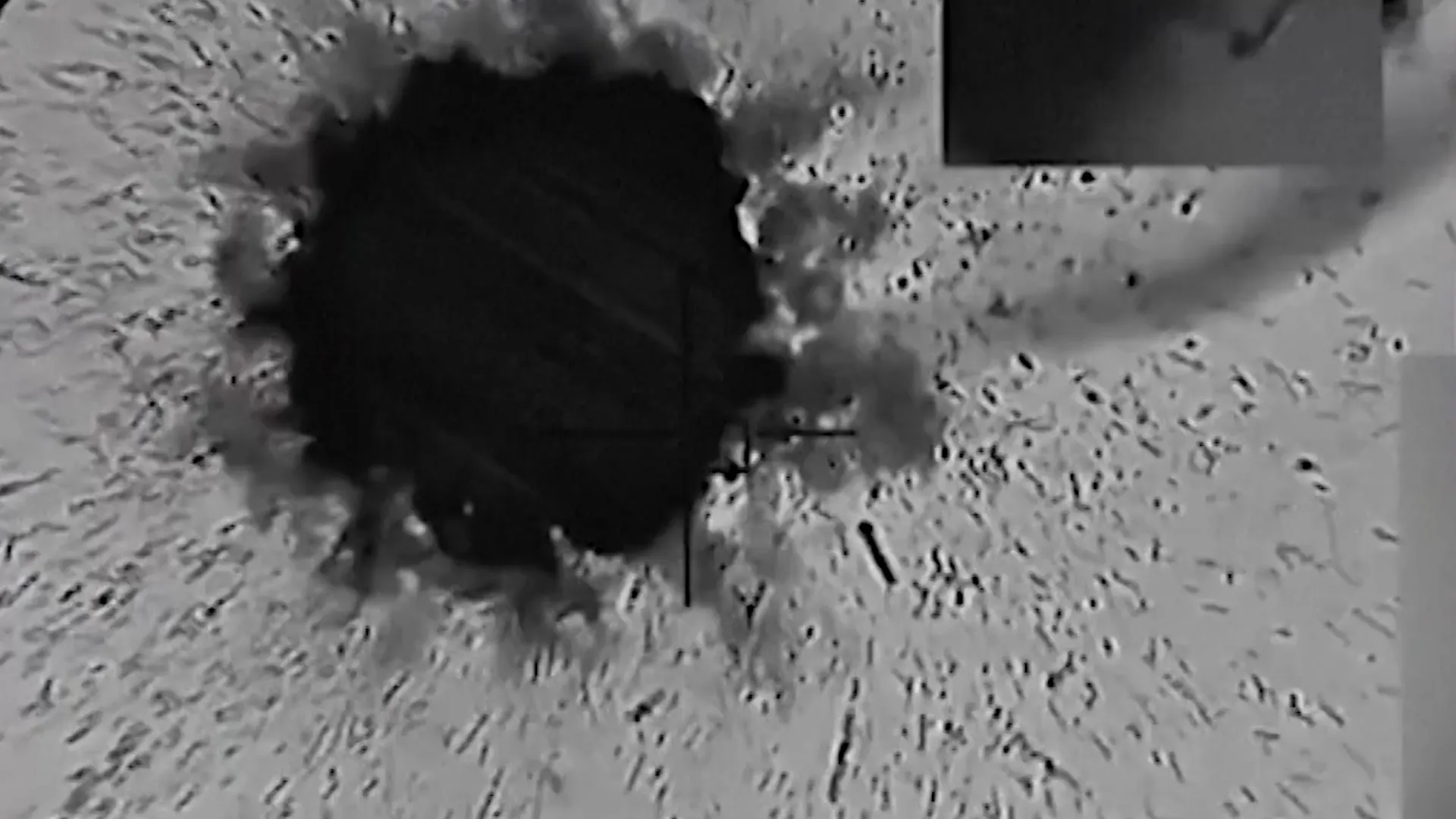
The Qatari Ministry of Defence has released a video showing the interception of Iranian missiles and drones over the country, a move that is likely to escalate tensions in the already volatile region. The footage, which was released on Wednesday, appears to show the successful interception of multiple missiles and drones by the Qatari military, using advanced defense systems. According to officials, the interception occurred on Tuesday evening, when the Iranian missiles and drones entered Qatari airspace, prompting a swift response from the country's defense forces.
The release of the video has sparked a flurry of reactions from regional and international experts, with many warning of the potential consequences of such actions. Dr. Ahmed Al-Hassan, a regional security expert at the Gulf Research Center, noted that "the interception of Iranian missiles and drones by Qatar is a significant development, and one that highlights the growing tensions between the two countries. It's a clear message from Qatar that it will not tolerate any violations of its airspace, and that it has the capabilities to defend itself against any threats."
Background and Context
The tensions between Qatar and Iran have been simmering for some time, with the two countries having fundamentally different views on a range of regional issues. Qatar, along with its Gulf Cooperation Council (GCC) allies, has been critical of Iran's support for militant groups in the region, as well as its nuclear program. Iran, on the other hand, has accused Qatar and its allies of meddling in the internal affairs of other countries, and of supporting terrorist groups. The release of the video by the Qatari Ministry of Defence is likely to further exacerbate these tensions, and could potentially lead to a escalation of the conflict.
According to Major General Hamad Al-Marri, Chief of Staff of the Qatari Armed Forces, "the interception of the Iranian missiles and drones is a testament to the capabilities and readiness of the Qatari military. We will not hesitate to defend our country and its people against any threats, and we will take all necessary measures to protect our national security." When asked about the potential consequences of the interception,
"We are always prepared for any eventuality, and we will not be intimidated by the actions of any country. We will continue to work with our allies and partners to maintain regional stability and security,"
Major General Al-Marri added.
Regional and International Implications
The release of the video and the interception of the Iranian missiles and drones have significant regional and international implications. The incident is likely to be seen as a challenge to Iran's authority in the region, and could potentially lead to a escalation of the conflict. Dr. Sanam Vakil, a Middle East expert at the Chatham House think tank, noted that "the interception of the Iranian missiles and drones by Qatar is a significant development, and one that highlights the growing tensions between the two countries. It's a clear message from Qatar that it will not tolerate any violations of its airspace, and that it has the capabilities to defend itself against any threats."
The incident is also likely to have implications for the ongoing efforts to resolve the conflict in the region. The United States, which has been seeking to build a coalition to counter Iranian influence in the region, is likely to welcome the interception of the Iranian missiles and drones by Qatar. US Secretary of State, Anthony Blinken, noted that "the United States commends Qatar for its swift and effective response to the Iranian threat. We will continue to work with our allies and partners to maintain regional stability and security, and to counter the malign activities of Iran."
In conclusion, the release of the video by the Qatari Ministry of Defence and the interception of the Iranian missiles and drones is a significant development that is likely to have far-reaching consequences for the region. As tensions continue to escalate, it remains to be seen how the situation will unfold, but one thing is certain - the region will be watching with bated breath as the situation continues to evolve. The coming days and weeks will be critical in determining the trajectory of the conflict, and it is imperative that all parties involved work towards a peaceful resolution, rather than allowing the situation to spiral out of control.