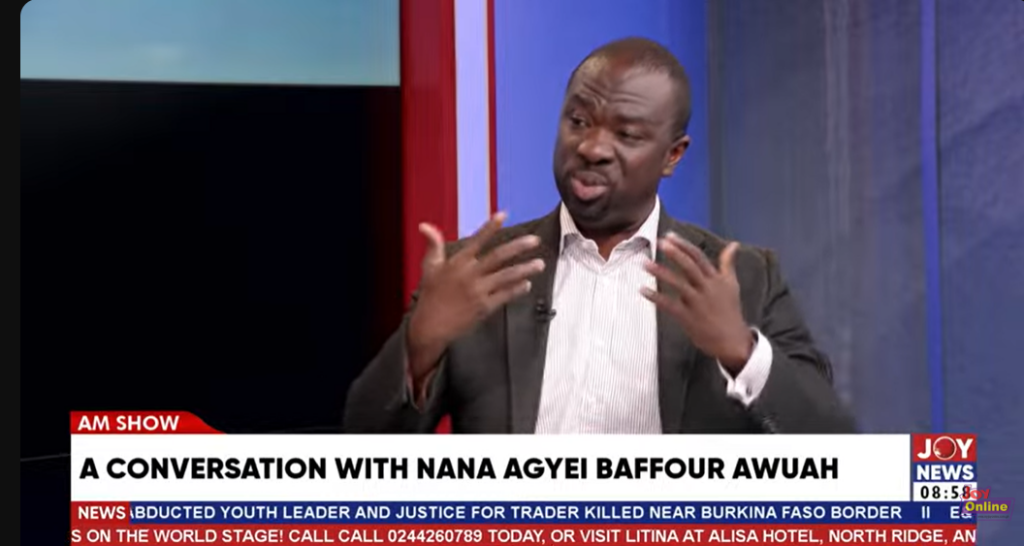
The Mahama administration's 24-hour economy policy may have inadvertently contributed to unrealistic job expectations among young Ghanaians, according to Nana Agyei Baffour Awuah, the Member of Parliament for Manhyia South and Vice Chairman of the Subsidiary Legislative Committee of Parliament. This revelation comes as the country grapples with high levels of youth unemployment, with many young people pinning their hopes on the ongoing security service recruitment exercise as a means of gainful employment.
According to Nana Agyei Baffour Awuah, a review of the National Democratic Congress (NDC)'s 24-hour economy document reveals no clear provision for the security sector, raising questions about how the two became connected in the public perception. This disconnect has led to accusations that the previous administration may have inadvertently raised false hopes among young people, who saw the policy as a guarantee of employment opportunities in the security services. As Nana Agyei Baffour Awuah noted in an interview, "the 24-hour economy policy was meant to promote economic growth and development, but it appears that some people misunderstood its objectives and linked it to job creation in the security sector."
Link Between 24-Hour Economy Policy and Security Service Recruitment
The link between the 24-hour economy policy and the security service recruitment exercise is not immediately clear, and experts say that this lack of clarity may have contributed to the unrealistic expectations among young people.
"The 24-hour economy policy is a broad economic development strategy that aims to promote economic growth and development by keeping the economy open for business 24 hours a day,"said Dr. George Domfeh, a lecturer in economics at the University of Ghana. However, the policy document does not specifically mention the security sector as a key area of focus, which has led to confusion about its relationship to the ongoing recruitment exercise.
Meanwhile, the security service recruitment exercise has generated a lot of interest among young people, with thousands of applicants competing for a limited number of positions. The exercise has been hailed as a major opportunity for young people to gain employment, but some experts warn that it may not be the panacea for youth unemployment that many people expect. As Colonel Kwame Asamoah, a retired military officer, noted, "the security services can only absorb a limited number of recruits, and we need to be realistic about the opportunities that are available."
Implications for Youth Unemployment
The potential mismatch between the expectations of young people and the reality of the job market has serious implications for youth unemployment in Ghana. Youth unemployment is a major challenge facing the country, with many young people struggling to find gainful employment. The situation is further complicated by the fact that many young people lack the skills and qualifications needed to compete in the modern job market.
Experts say that the government needs to take a more nuanced approach to addressing youth unemployment, one that takes into account the complex needs and aspirations of young people.
"We need to move beyond the notion that a single policy or program can solve the problem of youth unemployment,"said Madam Akua Dansoa, a youth development expert. Instead, we need to adopt a more comprehensive approach that addresses the root causes of unemployment and provides young people with the skills and support they need to succeed.
In conclusion, the Mahama administration's 24-hour economy policy may have inadvertently contributed to unrealistic job expectations among young Ghanaians, particularly with regards to the security service recruitment exercise. As the country moves forward, it is essential that policymakers take a more nuanced approach to addressing youth unemployment, one that takes into account the complex needs and aspirations of young people. By doing so, we can work towards creating a more prosperous and equitable society for all Ghanaians, where young people have the opportunity to reach their full potential and contribute to the development of the country.