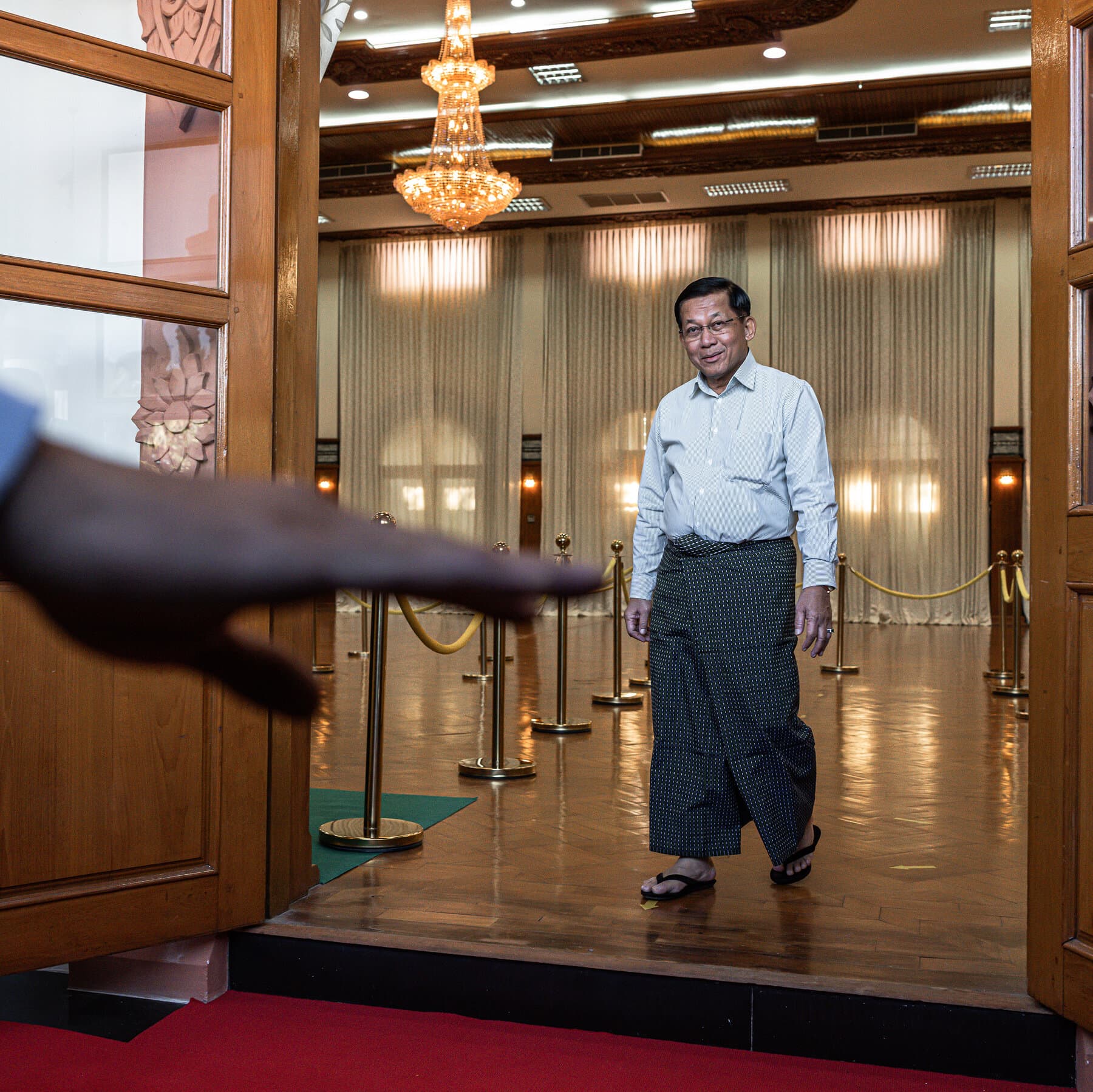
The elections, held earlier this year, were characterized by intimidation, violence, and blatant manipulation of the electoral process. International observers and human rights groups have roundly condemned the polls, describing them as a farce designed to perpetuate military rule. Despite this, the military leadership is pushing ahead with plans to establish a new government, with Min Aung Hlaing at its helm. "The junta's strategy is clear: to create a veneer of legitimacy through a carefully managed electoral process," said Dr. Maung Zarni, a Myanmar expert at the University of London. "By seeking the title of President, Min Aung Hlaing is attempting to project himself as a legitimate leader, rather than a military dictator."
Background to the Crisis
The current crisis in Myanmar began in February 2021, when the military, led by Min Aung Hlaing, seized power in a coup, overthrowing the democratically elected government of Aung San Suu Kyi. The coup was widely condemned by the international community, with many countries imposing sanctions on the military leadership. Since then, the junta has ruled with an iron fist, cracking down on dissent and imprisoning thousands of opposition activists, journalists, and human rights defenders. The economy has also suffered, with widespread poverty and instability becoming increasingly entrenched.
International Reaction
The international community has been scathing in its criticism of the junta's actions, with many countries refusing to recognize the legitimacy of the military-backed government. "The elections in Myanmar were a sham, and the international community must not recognize their outcome," said Ambassador Chris Sidoti, the Australian government's special envoy for Myanmar. "We will continue to work with our international partners to apply pressure on the junta to restore democracy and respect for human rights." The United States, European Union, and other major powers have also imposed sanctions on the military leadership, in an effort to pressure them into reversing their coup and restoring democratic rule.
"The situation in Myanmar is a stark reminder of the dangers of authoritarianism and the importance of protecting democratic values," said UN Secretary-General António Guterres. "The international community must remain vigilant and continue to support the people of Myanmar in their struggle for freedom and democracy."
Implications for the Region
The developments in Myanmar have significant implications for the wider region, with many countries watching with concern as the crisis deepens. The Association of Southeast Asian Nations (ASEAN) has been attempting to mediate a resolution to the crisis, but its efforts have been hindered by the junta's intransigence. "The situation in Myanmar is a major challenge for ASEAN, and we must work together to find a solution," said ASEAN Secretary-General Dato Lim Jock Hoi. "We will continue to engage with all parties to promote dialogue and reconciliation, and to support the people of Myanmar in their quest for peace and democracy."
As the situation in Myanmar continues to unfold, the international community remains committed to supporting the people of Myanmar in their struggle for freedom and democracy. With Min Aung Hlaing's expected bid for the presidency, the junta is likely to face increased scrutiny and pressure from the international community. As Dr. Zarni noted, "The junta's attempt to legitimize its rule through a sham election will not fool anyone. The international community must remain firm in its commitment to democracy and human rights, and continue to push for a return to democratic rule in Myanmar." In the coming weeks and months, the world will be watching closely as the situation in Myanmar continues to evolve, with the hope that a peaceful and democratic resolution can be found to the crisis.