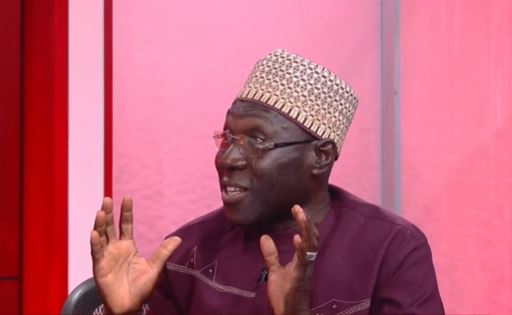
The International Monetary Fund (IMF) has been accused of influencing Ghana's security recruitment process, with a former Minister claiming that the organization played a significant role in determining the current number of available slots. According to Inusah Fuseini, a former Member of Parliament for Tamale Central and ex-Minister for Lands and Natural Resources, the IMF negotiated a 5,000 security recruitment quota with the government. This revelation has sparked concerns about the level of external influence on the country's internal security affairs.
The claim made by Inusah Fuseini suggests that the IMF's involvement in Ghana's security recruitment process may be more extensive than previously thought. The former Minister stated that the 5,000 quota was a condition of the IMF's support package for Ghana, which raises questions about the extent to which external organizations are shaping the country's security policies. The implications of this claim are significant, as it could mean that Ghana's security needs are being compromised to meet the requirements of an external organization.
Background to the Claim
Inusah Fuseini's claim is not entirely surprising, given the history of IMF involvement in Ghana's economic affairs. The country has been a recipient of IMF support packages on several occasions, with the most recent being a $918 million extended credit facility agreed upon in 2015. As part of the conditions for this support, the IMF has been known to require recipient countries to implement certain economic and structural reforms. However, the extent to which these reforms can influence internal security affairs is a matter of concern.
According to Dr. Eric Osei, a security analyst at the University of Ghana, the IMF's influence on Ghana's security recruitment process is a cause for concern. "The security needs of a country should be determined by its internal circumstances, not by external organizations," he said. "If the IMF is indeed dictating the number of slots available for security recruitment, it raises questions about the country's sovereignty and ability to determine its own security needs."
"The IMF's involvement in Ghana's security recruitment process is a clear example of how external organizations can influence the internal affairs of a country. It is essential that the government is transparent about the terms of its agreement with the IMF and ensures that the country's security needs are not compromised,"said Colonel Kwame Amponsah (rtd.), a former military officer and security expert.
Implications of the Claim
The implications of Inusah Fuseini's claim are far-reaching, with potential consequences for Ghana's security sector. If the IMF is indeed dictating the number of slots available for security recruitment, it could mean that the country's security needs are not being adequately addressed. This could lead to a shortage of security personnel, which could compromise the country's ability to maintain law and order. Furthermore, the involvement of an external organization in the security recruitment process could undermine the credibility of the security agencies and create mistrust among the public.
Meanwhile, the government has not responded to Inusah Fuseini's claim, which has raised suspicions about the level of transparency in the security recruitment process. Dr. Kwame Adu, a political analyst at the Ghana Center for Democratic Development, believes that the government needs to be more transparent about its dealings with the IMF. "The government should come clean about the terms of its agreement with the IMF and ensure that the country's security needs are not being compromised," he said.
In conclusion, the claim made by Inusah Fuseini about the IMF's influence on Ghana's security recruitment process has raised important questions about the level of external influence on the country's internal security affairs. As the country continues to grapple with security challenges, it is essential that the government is transparent about its dealings with external organizations and ensures that the security needs of the country are not being compromised. The government's response to this claim will be closely watched, as it will have significant implications for the country's security sector and its relationship with external organizations.