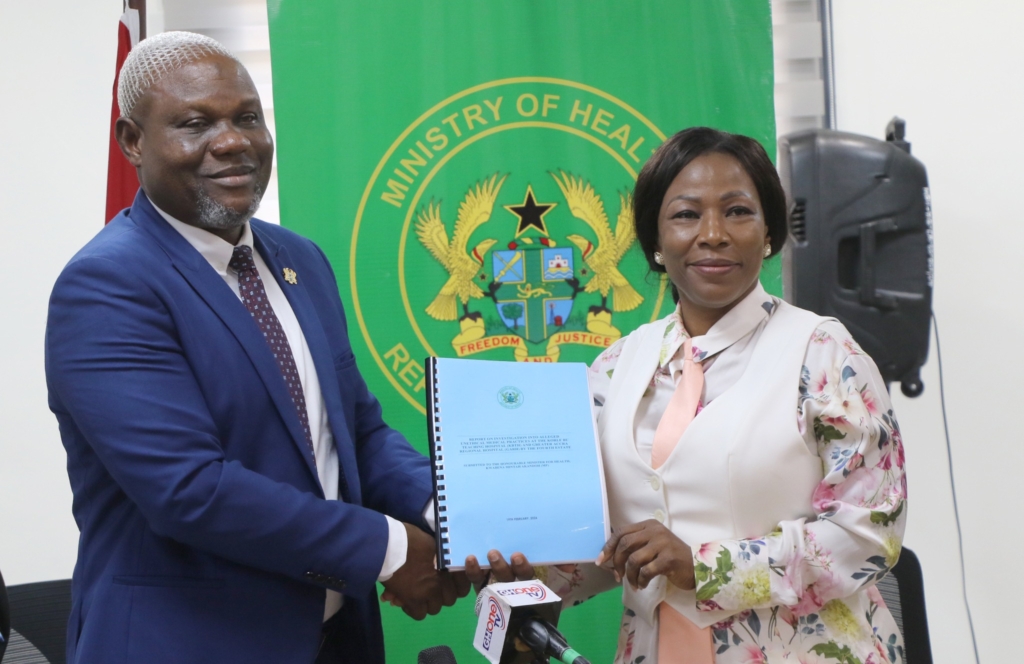
The Ministry of Health has received the findings of an investigative committee set up to probe allegations of “medical kalabule” involving the Greater Accra Regional Hospital and the Korle Bu Teaching Hospital. According to sources, the report cites misconduct on the part of certain individuals but finds no evidence of collusion between the hospitals and external parties. The allegations of “medical kalabule,” a term used in Ghana to describe corrupt practices, had sparked widespread concern and calls for an investigation.
Investigation Background
The investigation was launched in response to allegations that some staff members at the two hospitals were involved in corrupt practices, including the sale of medical supplies and equipment on the black market. The allegations suggested that these practices were not only unethical but also posed a risk to patient care and safety. The Ministry of Health took swift action, setting up an investigative committee to look into the allegations and determine their validity.
The committee, composed of experts from various fields, including medicine, law, and auditing, was tasked with gathering evidence and interviewing witnesses. The investigation was thorough and meticulous, with the committee reviewing documents, conducting site visits, and speaking with staff members and patients. According to Dr. Ama Owusu-Acheampong, a member of the investigative committee, "The investigation was a complex and challenging process, but we were committed to uncovering the truth and ensuring that those responsible were held accountable."
Key Findings
The report, which has been submitted to the Ministry of Health, cites misconduct on the part of certain individuals, including hospital staff members and suppliers. The report alleges that these individuals were involved in the sale of medical supplies and equipment on the black market, in violation of hospital policies and procedures. However, the report finds no evidence of collusion between the hospitals and external parties, including suppliers and other healthcare providers.
"The report is a sobering reminder of the need for vigilance and accountability in our healthcare system," said Professor Francis Nkrumah, a healthcare expert. "While it is reassuring that there is no evidence of collusion, the fact that misconduct occurred at all is a cause for concern and highlights the need for stronger controls and oversight."
The report makes several recommendations, including the implementation of stricter controls and oversight mechanisms to prevent similar incidents in the future. The report also recommends that the individuals found to be involved in misconduct be held accountable and face disciplinary action. According to Mr. Kwame Mensah, a spokesperson for the Ministry of Health, "The Ministry takes these allegations very seriously and is committed to ensuring that those responsible are held accountable. We will work to implement the recommendations of the report and strengthen our controls and oversight mechanisms to prevent similar incidents in the future."
Implications and Next Steps
The release of the report has significant implications for the healthcare sector in Ghana. The findings of the report highlight the need for greater transparency and accountability in the healthcare system and underscore the importance of strong controls and oversight mechanisms. The report also underscores the need for ongoing monitoring and evaluation to ensure that the healthcare system is functioning effectively and efficiently.
The Ministry of Health has announced that it will take immediate action to implement the recommendations of the report. This will include the establishment of a task force to oversee the implementation of the recommendations and ensure that the necessary controls and oversight mechanisms are put in place. According to Dr. Akosua Gyimah, a healthcare expert, "The implementation of the recommendations will require a concerted effort from all stakeholders, including the Ministry of Health, healthcare providers, and patients. It will also require a commitment to transparency and accountability and a willingness to make difficult decisions to ensure that the healthcare system is functioning in the best interests of patients."
In conclusion, the release of the report on the allegations of “medical kalabule” at the Greater Accra Regional Hospital and the Korle Bu Teaching Hospital is a significant development in the ongoing efforts to strengthen the healthcare system in Ghana. While the findings of the report are disturbing, they also highlight the importance of accountability and transparency in the healthcare system. As the Ministry of Health moves to implement the recommendations of the report, it is clear that there is still much work to be done to ensure that the healthcare system is functioning effectively and efficiently. However, with a commitment to transparency, accountability, and patient-centered care, it is possible to build a healthcare system that meets the needs of all Ghanaians. As Professor Francis Nkrumah noted, "The future of healthcare in Ghana depends on our ability to learn from the past and work together to build a system that is accountable, transparent, and patient-centered."