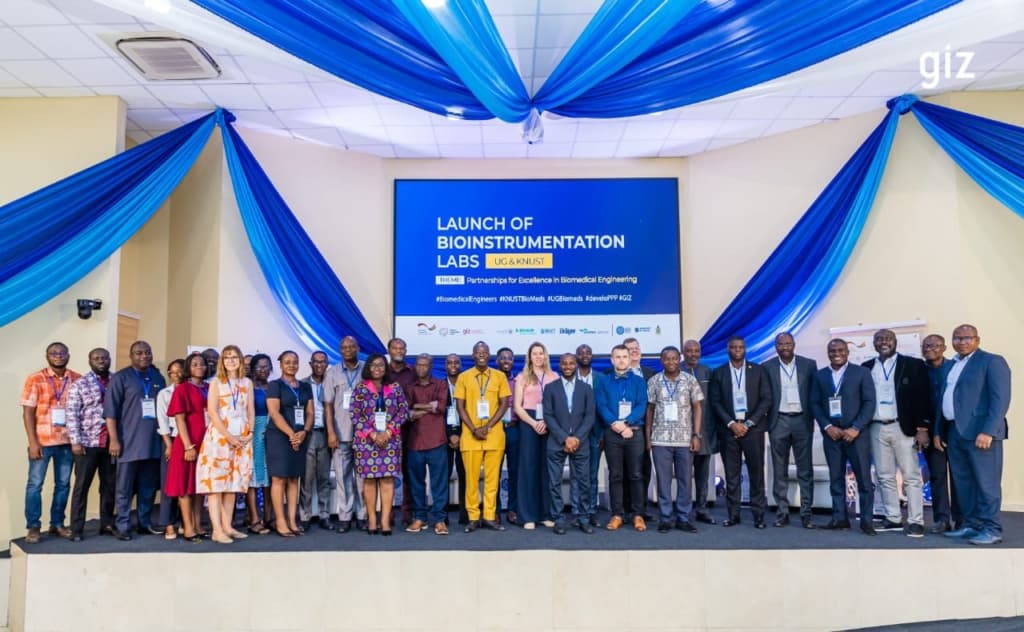
The commissioning of the bio-instrumentation laboratory marks a significant milestone in the partnership between the University of Ghana and the German Development Cooperation. According to Professor Ebenezer Owusu, Vice Chancellor of the University of Ghana, the laboratory will play a critical role in enhancing the quality of education and research in biomedical engineering. "The laboratory will provide our students with the opportunity to acquire practical skills in the design, development, and testing of medical devices and equipment, preparing them for the workforce and enabling them to contribute to the development of Ghana's healthcare sector," he said. The laboratory is expected to have a positive impact on the university's biomedical engineering program, which has been growing in popularity in recent years.
Enhancing Practical Training
The bio-instrumentation laboratory is equipped with a range of equipment, including electrocardiogram machines, ultrasound machines, and patient simulators. These tools will enable students to gain hands-on experience in the measurement and analysis of physiological signals, the design and development of medical devices, and the testing and evaluation of medical equipment. Dr. Ama Gyamfi, a lecturer in the Department of Biomedical Engineering, noted that the laboratory will provide students with the opportunity to work on real-world projects, applying theoretical concepts to practical problems. "The laboratory will enable our students to develop innovative solutions to healthcare challenges, preparing them for the workforce and enabling them to make a positive impact in the healthcare sector," she said.
Strengthening Technical Capacity
The commissioning of the bio-instrumentation laboratory is part of a broader effort to strengthen technical capacity in Ghana's healthcare sector. The laboratory will provide training and capacity-building programs for healthcare professionals, enabling them to acquire the skills and knowledge needed to operate and maintain medical equipment. According to Mr. Hans-Helge Sander, a representative of the German Development Cooperation, the laboratory will play a critical role in addressing the shortage of skilled professionals in the healthcare sector. "The laboratory will provide a platform for collaboration between academia, industry, and healthcare professionals, enabling the development of innovative solutions to healthcare challenges," he said. The laboratory is expected to have a positive impact on the country's healthcare sector, enhancing the quality of healthcare services and improving health outcomes.
"The commissioning of the bio-instrumentation laboratory is a significant milestone in our partnership with the University of Ghana. We are committed to supporting the development of Ghana's healthcare sector, and we believe that this laboratory will play a critical role in addressing the country's health challenges." - Mr. Hans-Helge Sander, German Development Cooperation
The commissioning of the bio-instrumentation laboratory has been welcomed by stakeholders in the healthcare sector, who believe that it will have a positive impact on the quality of healthcare services in Ghana. Dr. Kwame Asare, a medical practitioner, noted that the laboratory will provide a platform for the development of innovative solutions to healthcare challenges. "The laboratory will enable healthcare professionals to acquire the skills and knowledge needed to operate and maintain medical equipment, enhancing the quality of healthcare services and improving health outcomes," he said. The laboratory is expected to have a positive impact on the country's healthcare sector, addressing the shortage of skilled professionals and enhancing the quality of healthcare services.
Future Prospects
The commissioning of the bio-instrumentation laboratory marks a significant milestone in the development of Ghana's healthcare sector. The laboratory is expected to have a positive impact on the quality of healthcare services, enhancing the skills and knowledge of healthcare professionals and providing a platform for the development of innovative solutions to healthcare challenges. According to Professor Ebenezer Owusu, Vice Chancellor of the University of Ghana, the laboratory will play a critical role in addressing the country's health challenges. "We are committed to supporting the development of Ghana's healthcare sector, and we believe that this laboratory will play a critical role in enhancing the quality of healthcare services and improving health outcomes," he said. The laboratory is expected to have a positive impact on the country's healthcare sector, and it is anticipated that it will become a center of excellence for biomedical engineering in West Africa.
In conclusion, the commissioning of the bio-instrumentation laboratory at the University of Ghana marks a significant milestone in the development of Ghana's healthcare sector. The laboratory will provide a platform for the development of innovative solutions to healthcare challenges, enhancing the quality of healthcare services and improving health outcomes. As Ghana continues to develop its healthcare sector, the bio-instrumentation laboratory is expected to play a critical role in addressing the country's health challenges, providing a platform for collaboration between academia, industry, and healthcare professionals. The future of Ghana's healthcare sector looks promising, and the bio-instrumentation laboratory is expected to be at the forefront of efforts to enhance the quality of healthcare services and improve health outcomes.