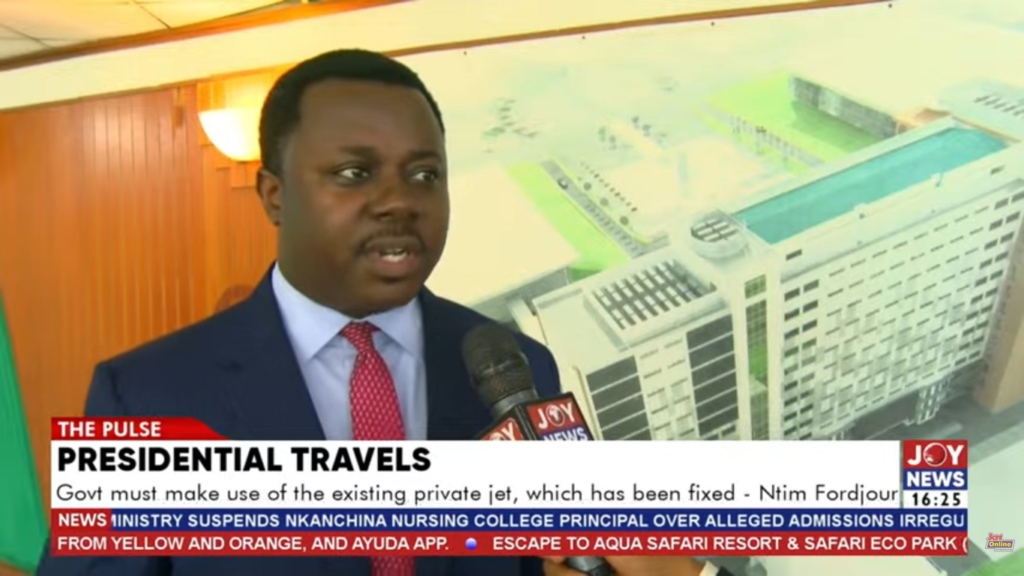
ACCRA, GHANA – The Ghanaian government has robustly defended President John Dramani Mahama's controversial practice of utilizing a private jet owned by his brother for official state travel, asserting that the arrangement significantly reduces the substantial costs associated with chartering commercial aircraft for presidential trips. The Minister of State in charge of Government Communications, Hon. Kwesi Amissah-Arthur, stated this week that the decision is a strategic fiscal measure aimed at ensuring prudent management of public funds.
The revelation comes amidst heightened public scrutiny over government expenditure and calls for greater transparency in state affairs. According to Hon. Amissah-Arthur, the cost of renting private jets for presidential delegations can often run into hundreds of thousands of dollars for a single trip, an expense he described as unsustainable for a developing nation like Ghana. He elaborated that the arrangement with the President's sibling, Ibrahim Mahama, allows the state to secure more favorable rates and greater flexibility, ultimately saving the taxpayer considerable sums.
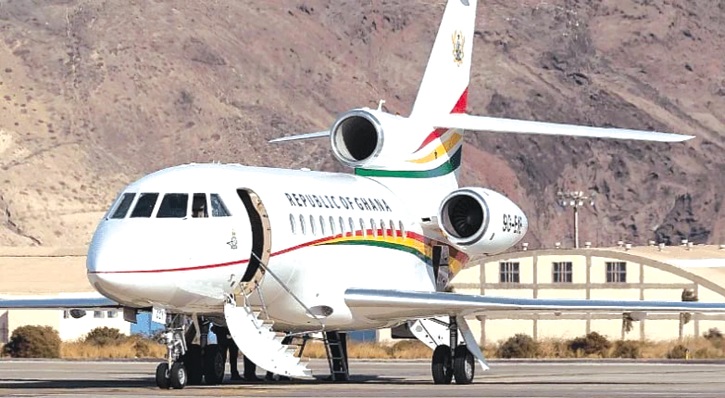
"Our President travels extensively on behalf of the nation, engaging with international partners and promoting Ghana's interests," Hon. Amissah-Arthur told journalists during a press briefing in Accra. "The alternative to using our national Falcon 900 EX, which sometimes undergoes maintenance or is unsuitable for long-haul flights, is to charter private jets. These charter costs are exorbitant, often including positioning fees, standby charges, and fuel surcharges that dwarf what we pay under the current arrangement. This is a pragmatic solution that prioritizes national resources."
The Minister did not disclose specific figures regarding the savings or the exact terms of the agreement with Mr. Ibrahim Mahama, citing confidentiality clauses. However, he emphasized that the arrangement is strictly commercial and undergoes due diligence to ensure fair value for the state. He assured the public that all protocols and ethical considerations are meticulously observed to prevent any conflict of interest.
The Debate Over Transparency and Ethics
While the government frames the decision as a cost-saving imperative, opposition parties and civil society organizations have raised significant concerns regarding transparency, conflict of interest, and ethical governance. They argue that the familial connection creates an inherent potential for undue influence and demands full public disclosure of the financial terms of the agreement.
Mr. Kwame Nkrumah-Buah, spokesperson for the opposition New Patriotic Front (NPF), criticized the lack of transparency surrounding the arrangement.
"It is simply unacceptable for the President to be flying on his brother's aircraft without full public disclosure of the contractual details," Mr. Nkrumah-Buah stated in a press release. "While we appreciate efforts to save money, the appearance of impropriety, especially involving the President's immediate family, undermines public trust. We need to know the exact hourly rates, the total payments made to date, and the competitive bidding process, if any, that led to this arrangement. Ghana deserves absolute transparency."
Critics also point out that even if the arrangement is financially advantageous, the perception of a conflict of interest could damage Ghana's reputation for good governance. They argue that the President, as the ultimate custodian of public resources, must avoid situations that could even remotely suggest personal enrichment or favoritism for family members.
Expert Perspectives on Governance and Public Procurement
Governance experts offer a nuanced perspective on the issue, acknowledging both the potential for cost efficiency and the critical need for transparency.
Dr. Ama Osei-Bonsu, a lecturer in Public Administration at the University of Ghana, noted that while governments worldwide often seek innovative ways to reduce operational costs, particularly for high-profile activities like presidential travel, such arrangements involving close family members require extraordinary levels of oversight.
"From a purely economic standpoint, if the state can secure a demonstrably better deal by utilizing an existing asset, it makes fiscal sense," Dr. Osei-Bonsu explained. "However, the litmus test for such arrangements, especially when a direct family member is involved, is absolute transparency and an ironclad ethical framework. There should be a publicly accessible, independently verified assessment demonstrating that the terms offered are indeed the most competitive and that all due processes for public procurement have been followed to the letter. Without this, even valid cost-saving measures will be tainted by suspicion."
Dr. Osei-Bonsu suggested that to dispel doubts, the government could commission an independent audit of the financial terms, make the contract public (with redactions for truly proprietary information if necessary), and establish clear guidelines for future arrangements of this nature. She also highlighted the importance of a robust asset management strategy for the presidential fleet itself, ensuring its readiness for all necessary trips.
Looking Ahead: Calls for Accountability
The debate surrounding President Mahama's travel arrangements underscores broader questions about accountability and fiscal prudence within the government. With an upcoming election cycle, issues of corruption and perceived conflicts of interest are likely to remain central to public discourse.
The government maintains that its actions are solely in the national interest and that the cost savings achieved through this arrangement are vital for channeling funds towards other pressing national development projects. However, the chorus of calls for greater transparency suggests that without more detailed disclosures, the controversy is likely to persist, keeping the issue firmly on the national agenda and demanding a clearer accounting of how public resources are managed.