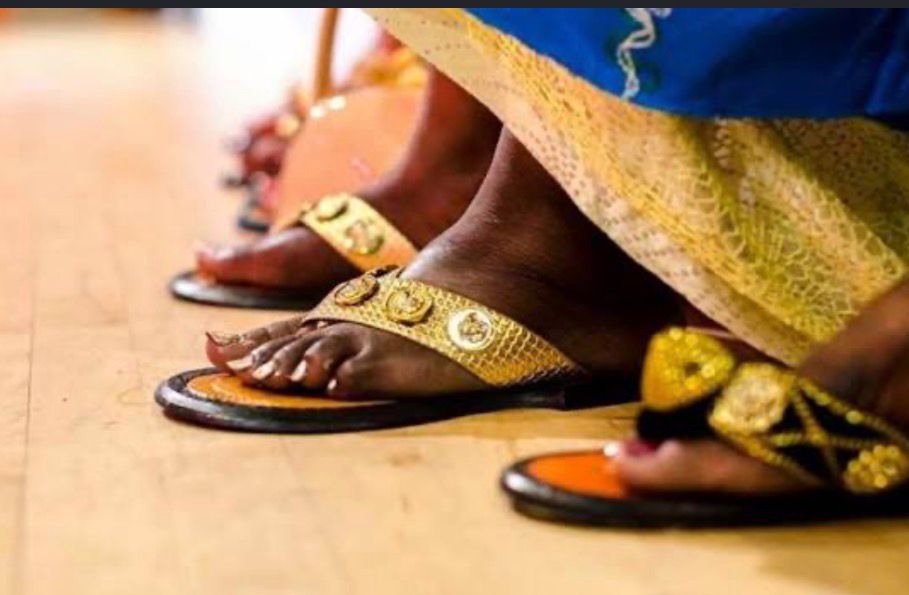
In the heart of Kumasi, a city steeped in tradition and culture, a centuries-old craft is being kept alive by skilled artisans. The creation of Ahenema, the royal slippers, is a process that requires patience, dedication, and attention to detail. These intricately designed slippers, once reserved exclusively for royalty, have been a staple of Ghanaian tradition, particularly among the Akan, Ga, and Ewe ethnic groups. Today, they continue to play a significant role in the country's rich cultural heritage, with their production and significance being celebrated during Ghana Month.
According to Dr. Kwame Owusu, a historian specializing in Ghanaian culture, "Ahenema has been an integral part of our traditional regalia for centuries. The slippers were not only a symbol of royalty but also represented the wealth and status of the wearer." The process of creating these slippers is a labor-intensive one, involving the careful selection of materials, including strips of leather and tires, which are then cut, shaped, and stitched together by skilled artisans. The end result is a pair of slippers that exudes elegance, comfort, and a deep sense of tradition.
The History and Significance of Ahenema
The history of Ahenema dates back to the pre-colonial era, when they were worn by chiefs and queens as a symbol of their authority and power. The slippers were often adorned with intricate designs and patterns, which were specific to each ethnic group. Ms. Ama Serwaa, a renowned Ghanaian fashion designer, notes, "Ahenema is more than just a pair of slippers; it's a representation of our cultural identity. The designs and patterns used in the creation of Ahenema are a testament to the ingenuity and craftsmanship of our ancestors." As the years passed, Ahenema evolved to become an essential part of Ghanaian traditional attire, with its significance extending beyond the royal family to include other members of society.
Today, Ahenema is celebrated as a national treasure, with efforts being made to preserve its cultural significance. The Ghanaian government has launched initiatives aimed at promoting the production and sale of Ahenema, both locally and internationally. Mr. Kwaku Appiah, a government official responsible for cultural affairs, states, "We recognize the importance of Ahenema in our cultural heritage, and we are committed to supporting artisans and designers who are working to keep this tradition alive." As a result, Ahenema has experienced a resurgence in popularity, with many Ghanaians embracing their cultural roots by incorporating the slippers into their traditional attire.
The Artisans Behind Ahenema
Behind the creation of Ahenema are skilled artisans who have spent years perfecting their craft. These artisans, often trained by their predecessors, possess a deep understanding of the traditional techniques and methods involved in the production of Ahenema. Mr. Kofi Owusu, a seasoned artisan, remarks, "The creation of Ahenema is a meticulous process that requires great attention to detail. From the selection of materials to the final stitching, every step is crucial in producing a pair of slippers that meets the highest standards of quality and tradition." The dedication and expertise of these artisans have ensured that Ahenema remains a vibrant and dynamic part of Ghanaian culture.
As Ghana Month celebrations continue, the focus on Ahenema serves as a reminder of the country's rich cultural heritage.
"Ahenema is a symbol of our cultural resilience and creativity,"notes Professor Akosua Adomako, a leading expert on Ghanaian culture. "As we move forward, it is essential that we continue to preserve and promote our cultural traditions, including the production and significance of Ahenema." As the world becomes increasingly globalized, the importance of cultural preservation cannot be overstated, and the story of Ahenema serves as a powerful reminder of the need to protect and celebrate our cultural identities.
In conclusion, the story of Ahenema, the royal slippers, is a testament to the enduring power of tradition and culture. As Ghana continues to evolve and grow, it is essential that the country's rich cultural heritage is preserved and promoted. The celebration of Ahenema during Ghana Month serves as a reminder of the importance of cultural preservation and the need to support artisans and designers who are working to keep this tradition alive. As we look to the future, it is clear that Ahenema will remain an integral part of Ghanaian culture, a symbol of the country's proud history and its people's unwavering commitment to their cultural heritage.