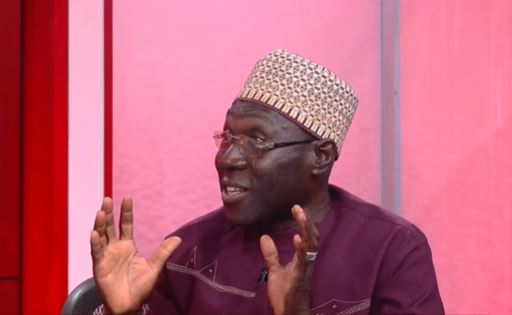

The recent audit of public claims, which uncovered a staggering GH¢21 billion in financial irregularities, has sparked a heated debate about accountability in Ghana's public sector. At the center of this debate is the role of civil servants, who have long been overlooked in the country's efforts to promote transparency and good governance. According to Kofi Bentil, Senior Vice President of IMANI-Africa, the tendency to focus on politicians while ignoring the culpability of civil servants is a major obstacle to meaningful reform.
Speaking in the wake of the audit report, Bentil emphasized the need for a more nuanced approach to accountability, one that recognizes the critical role of civil servants in the management of public funds. "We tend to focus too much on politicians and ignore the fact that civil servants are the ones who actually implement policies and manage the day-to-day activities of government agencies," he said.
"It's time for us to shift our attention to the civil service and ensure that they are held to the same standards of accountability as politicians."Bentil's comments are particularly relevant in light of the audit report, which revealed widespread financial irregularities across various government agencies.
The Audit Report: A Damning Indictment of Public Sector Management
The GH¢21 billion audit report is a damning indictment of public sector management in Ghana. The report, which was conducted by the government's audit service, identified numerous instances of financial irregularities, including unauthorized expenditures, misappropriation of funds, and lack of proper accounting records. While the report does not name specific individuals or agencies, it is clear that the problems are systemic and require a comprehensive response. Experts say that the report is a wake-up call for the government to take decisive action to address the accountability gap in the public sector.
Dr. Eric Owusu, a public sector management expert, noted that the audit report highlights the need for a more robust system of internal controls and oversight mechanisms. "The fact that such large amounts of money could be mismanaged without detection is a clear indication that our internal controls are weak," he said.
"We need to strengthen our audit processes and ensure that those responsible for managing public funds are held accountable for their actions."Dr. Owusu also emphasized the importance of providing adequate training and resources to civil servants to enable them to perform their duties effectively.
Civil Servants: The Unsung Heroes of Public Sector Management
Civil servants are the backbone of the public sector, responsible for implementing policies and delivering essential services to citizens. However, they are often overlooked in the accountability equation, with politicians taking the lion's share of the blame for financial irregularities. This is despite the fact that civil servants are the ones who actually manage the day-to-day activities of government agencies and are responsible for ensuring that public funds are used efficiently and effectively.
According to experts, the failure to hold civil servants accountable for their actions is a major obstacle to meaningful reform. "Civil servants are the ones who actually implement policies and manage public funds, so it's only logical that they should be held accountable for any irregularities," said Dr. Ama Biney, a governance expert.
"We need to create a culture of accountability within the civil service, where officials are held responsible for their actions and are rewarded for good performance."Dr. Biney also noted that this will require a fundamental shift in the way the civil service is managed, with a greater emphasis on transparency, accountability, and performance-based management.
Way Forward: Strengthening Accountability in the Public Sector
The GH¢21 billion audit report is a wake-up call for the government to take decisive action to address the accountability gap in the public sector. To achieve this, the government must take a comprehensive approach that involves strengthening internal controls, improving oversight mechanisms, and holding civil servants accountable for their actions. This will require a fundamental shift in the way the civil service is managed, with a greater emphasis on transparency, accountability, and performance-based management.
As the government grapples with the implications of the audit report, it is clear that the road to reform will be long and challenging. However, with the right approach and a commitment to transparency and accountability, it is possible to create a more efficient and effective public sector that serves the needs of all Ghanaians. As Kofi Bentil noted,
"The fight against corruption and mismanagement of public funds requires a concerted effort from all stakeholders, including politicians, civil servants, and citizens. We must work together to create a culture of accountability and transparency that promotes good governance and ensures that public funds are used for the benefit of all."Ultimately, the success of these efforts will depend on the government's ability to take decisive action and implement meaningful reforms that address the root causes of the accountability gap in the public sector.