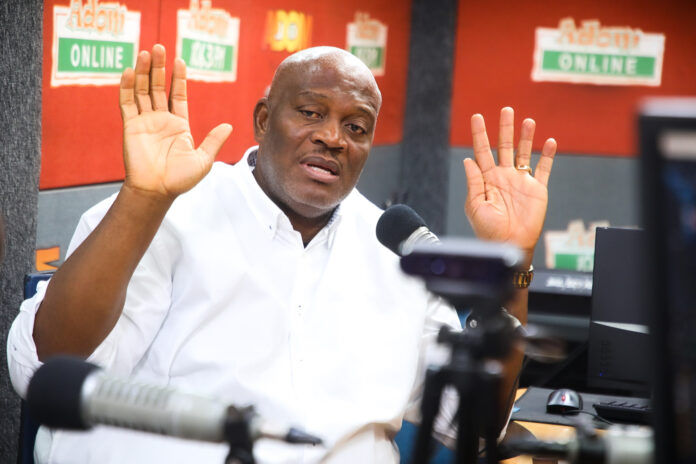
Accra, Ghana - In a recent statement, former Interior Minister and Greater Accra Regional Minister Henry Quartey has categorically denied allegations that he personally benefited from government land allocations during his tenure. The denial comes amidst growing concerns over the misuse of state-owned lands by high-ranking government officials. According to Quartey, he did not take any government land for personal use, contrary to claims made by some individuals and groups.
The allegations against Quartey have sparked a heated debate about the accountability and transparency of government officials in managing public resources. Land ownership and allocation have become a contentious issue in Ghana, with many citizens calling for more stringent measures to prevent the misuse of state lands. In response to the allegations, Quartey stated that he had always acted in accordance with the law and had not engaged in any activities that could be deemed as a conflict of interest.
Background to the Allegations
The allegations against Quartey are not isolated and are part of a broader concern about the management of government lands in Ghana. Over the years, there have been several reports of government officials and other influential individuals acquiring state lands for personal use, often at the expense of the general public. This has led to widespread discontent and calls for greater transparency and accountability in the allocation of public resources.
According to
"the allocation of government lands should be based on a clear and transparent process, with strict guidelines to prevent abuse,"said Dr. Kwame Addo, a lecturer in land economy at the University of Ghana. Dr. Addo emphasized the need for robust institutions and mechanisms to oversee the allocation of state lands, ensuring that they are used for the benefit of the general public rather than a select few.
Investigations and Next Steps
In response to the allegations, the relevant authorities have announced plans to conduct a thorough investigation into the allocation of government lands during Quartey's tenure. The investigation aims to determine whether any laws or regulations were breached and to identify measures to prevent similar incidents in the future.
"we will leave no stone unturned in our investigation, and anyone found to have engaged in wrongdoing will be held accountable,"said a spokesperson for the investigation team. The spokesperson emphasized the commitment of the authorities to ensuring transparency and accountability in the management of public resources.
The investigation has been welcomed by many as a step in the right direction towards promoting accountability and transparency in government. However, some have expressed concerns that the investigation may be influenced by political considerations, which could undermine its credibility and effectiveness.
Expert Opinions and Reactions
Reacting to the allegations, land experts have emphasized the need for a comprehensive review of the laws and regulations governing the allocation of government lands.
"the current system is vulnerable to abuse, and there is a need for more stringent measures to prevent the misuse of state lands,"said Mr. Frank Owusu, a land consultant.
Mr. Owusu called for the establishment of an independent land allocation committee to oversee the allocation of government lands, ensuring that the process is transparent and based on merit. He also emphasized the need for more public education and awareness about the laws and regulations governing land allocation, to empower citizens to hold their leaders accountable.
In conclusion, the allegations against former Interior Minister Henry Quartey have highlighted the need for greater transparency and accountability in the management of public resources. As the investigation into the allegations continues, it is essential that the authorities prioritize the interests of the general public and take measures to prevent the misuse of state lands. Ultimately, the outcome of the investigation will depend on the commitment of the authorities to promoting transparency and accountability in government, and their willingness to take bold action to address the concerns of citizens.