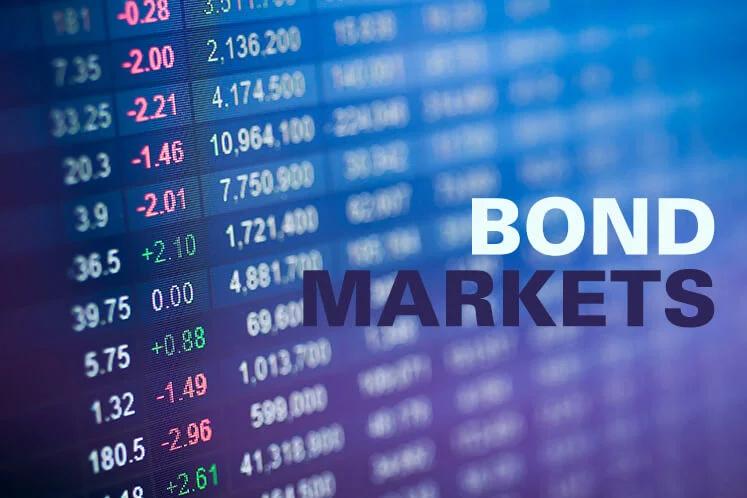
The bond market has experienced a significant decline in turnover, with an 18.16% decrease week-on-week to GH¢2.38 billion. This downturn in market activity has been attributed to a decrease in trading volume, with investors showing a preference for shorter-term bonds. According to market data, the front-to-belly segment of the curve saw the most trading activity, with the 2027-2030 maturities dominating market flows.
The 2027-2030 maturities accounted for 68.6% of total traded volumes, with a weighted-average yield of 10.62%. This indicates that investors are seeking shorter-term investments with relatively higher yields. Experts believe that this trend is likely to continue, as investors become increasingly risk-averse in the face of economic uncertainty. "The current market conditions are causing investors to be more cautious, and they are opting for shorter-term bonds with higher yields," said Emmanuel Adu, a bond market analyst.
Market Segments
The 2031-2034 segment followed, capturing 31.36% of total traded volumes. This segment saw a significant decrease in trading activity, with investors showing a preference for the shorter-term bonds. The decrease in trading activity in this segment is likely due to the higher yields offered by the 2027-2030 maturities. "Investors are looking for higher yields, and the 2027-2030 maturities are offering the best returns," said Francesca Mensah, a financial expert.
The bond market is a crucial component of the economy, providing a platform for governments and corporations to raise capital. The current decline in market activity is likely to have a significant impact on the economy, as it may limit the ability of governments and corporations to raise capital. "The decline in bond market activity is a concern, as it may limit the ability of governments and corporations to raise capital," said Kofi Owusu, a financial analyst.
Expert Analysis
Experts believe that the decline in bond market activity is due to a combination of factors, including economic uncertainty and a decrease in investor confidence. "The current economic conditions are causing investors to be more cautious, and they are opting for safer investments," said Emmanuel Adu. The decrease in investor confidence is likely due to the current economic uncertainty, which is causing investors to be more risk-averse.
The bond market is a complex and dynamic system, and it is influenced by a wide range of factors. The current decline in market activity is likely to be a short-term trend, and we expect the market to recover in the long term.
According to Francesca Mensah, the bond market is expected to recover in the long term, as investors become more confident in the economy. "The bond market is a crucial component of the economy, and it will continue to play a vital role in the future," she said. The recovery of the bond market will likely be driven by an increase in investor confidence, which will be influenced by a range of factors, including economic growth and monetary policy.
Conclusion
In conclusion, the bond market has experienced a significant decline in turnover, with an 18.16% decrease week-on-week to GH¢2.38 billion. The decline in market activity is likely due to a combination of factors, including economic uncertainty and a decrease in investor confidence. Experts believe that the market will recover in the long term, as investors become more confident in the economy. As Kofi Owusu noted, "The bond market is a complex and dynamic system, and it will continue to play a vital role in the economy." The future of the bond market will be shaped by a range of factors, including economic growth, monetary policy, and investor confidence.