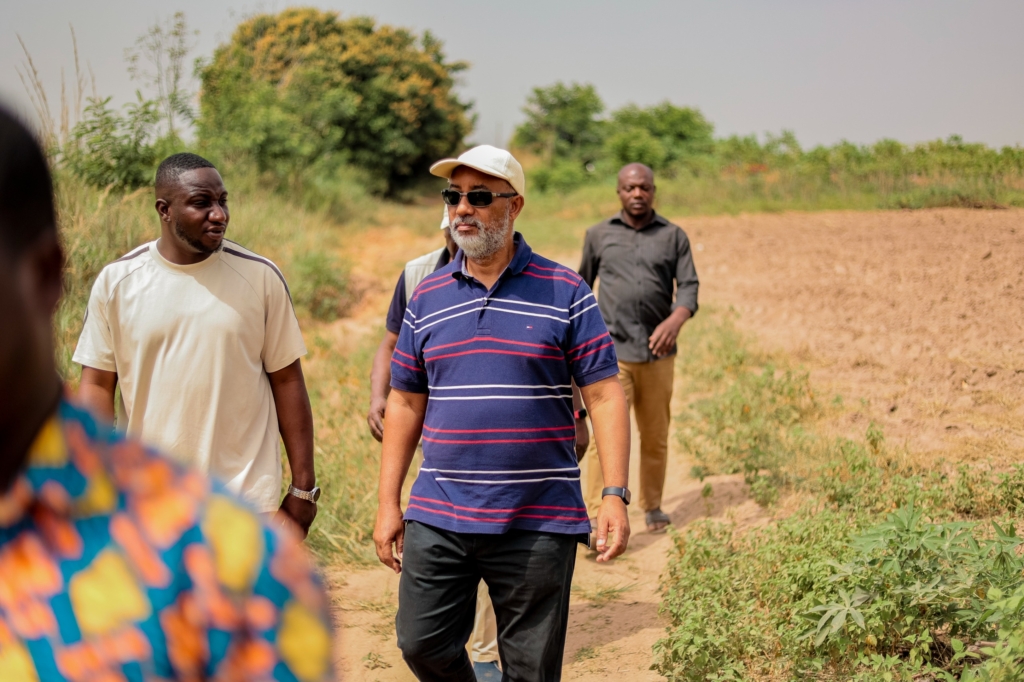
The CEO of the Millennium Development Authority (MiDA) has raised concerns over the vast amounts of wasted agricultural assets in the country, citing the underutilization of critical infrastructure as a major hindrance to the growth of the agricultural sector. According to the MiDA CEO, the situation is alarming and requires immediate attention from stakeholders to maximize the potential of the sector. The warning comes after a comprehensive assessment of the country's agricultural assets, which included technical inspections of irrigation schemes, dams, inland valleys, markets, and agro-processing facilities.
The MiDA team, led by its CEO, conducted an extensive engagement with traditional authorities, regional and district officials, and private agribusiness operators to gain a deeper understanding of the challenges facing the sector. The assessment revealed that many of the country's agricultural assets are not being fully utilized, resulting in significant losses to the economy. Underutilization of irrigation schemes, for instance, has been identified as a major concern, with many schemes operating at less than 50% capacity. This has resulted in reduced crop yields, decreased farmer incomes, and increased poverty levels in rural areas.
Technical Inspections and Findings
The technical inspections conducted by the MiDA team revealed a number of challenges that are contributing to the underutilization of agricultural assets. According to Dr. Ama Okyere, a technical expert with MiDA, "our inspections showed that many of the irrigation schemes are in a state of disrepair, with broken pumps, damaged canals, and inadequate water supply systems. This has resulted in reduced water availability for farmers, making it difficult for them to cultivate their crops." Dr. Okyere noted that the situation is further compounded by the lack of maintenance culture, which has led to the breakdown of critical infrastructure.
In addition to the technical challenges, the MiDA team also identified inadequate market access as a major constraint to the growth of the agricultural sector. Many farmers are unable to access markets for their produce, resulting in significant post-harvest losses.
"The lack of market access is a major challenge for many farmers, resulting in reduced incomes and increased poverty levels,"said Mr. Kwame Frimpong, a farmer from the Ashanti Region. Mr. Frimpong noted that the situation is further complicated by the lack of storage facilities, which makes it difficult for farmers to store their produce and sell it at a later time.
Call to Action
The MiDA CEO has called on stakeholders, including the government, private sector operators, and development partners, to take immediate action to address the challenges facing the agricultural sector. According to the CEO, investing in agricultural infrastructure is critical to maximizing the potential of the sector. "We need to invest in irrigation schemes, dams, and other critical infrastructure to support the growth of the agricultural sector," the CEO said. The CEO also emphasized the need for capacity building and training for farmers, to enable them to take advantage of the available infrastructure and produce high-quality crops.
The MiDA CEO's warning has been supported by other stakeholders in the sector, who have called for urgent action to address the challenges facing the agricultural sector. Mr. Kwadwo Owusu, a development expert, noted that the underutilization of agricultural assets has significant implications for the country's food security and economic development. "We need to take immediate action to address the challenges facing the agricultural sector, to ensure that we can produce enough food to feed our people and generate income for our farmers," Mr. Owusu said.
In conclusion, the MiDA CEO's warning over the wasted agricultural assets in the country is a call to action for stakeholders to take immediate action to address the challenges facing the agricultural sector. With the right investments in infrastructure, capacity building, and training, the sector has the potential to drive economic growth, reduce poverty, and improve food security. As the country looks to the future, it is imperative that stakeholders work together to maximize the potential of the agricultural sector and ensure that the country's agricultural assets are fully utilized to benefit all citizens.