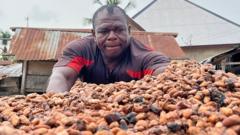
The global chocolate market is experiencing a significant downturn, and West Africa's cocoa farmers are bearing the brunt of the economic impact. Despite the rising prices of chocolate bars, cocoa farmers in the region are facing financial ruin due to a combination of factors, including fluctuating market prices, climate change, and unsustainable farming practices. The situation has become so dire that many farmers are struggling to make ends meet, with some even considering abandoning their farms altogether.
According to Dr. Ama Konadu, a cocoa expert at the Ghana-based Cocoa Research Institute, the current market slump is a result of a perfect storm of factors. "The global chocolate market is experiencing a slowdown in demand, which has led to a surplus of cocoa beans on the market," she explained. "This surplus has driven down the price of cocoa, making it difficult for farmers to break even, let alone make a profit." Konadu added that the situation is further complicated by the fact that many cocoa farmers in West Africa are small-scale producers who lack the resources and infrastructure to adapt to changing market conditions.
Climate Change and Unsustainable Farming Practices
Climate change is also playing a significant role in the struggles faced by cocoa farmers. Rising temperatures and changing precipitation patterns are altering the delicate ecosystem that cocoa trees rely on, leading to reduced yields and lower quality beans. Mr. Kofi Owusu, a cocoa farmer in Ghana, noted that the changing climate has made it increasingly difficult to predict and prepare for the annual cocoa harvest. "We used to be able to rely on the rains to come at a certain time every year, but now it's become unpredictable," he said. "This makes it hard to plan and prepare for the harvest, and it's affecting the quality of our beans."
In addition to climate change, unsustainable farming practices are also contributing to the decline of the cocoa industry. Many farmers in West Africa are using practices such as deforestation and over-reliance on chemical fertilizers, which can damage the soil and reduce the long-term productivity of their farms. Dr. Emmanuel Agyemang, a soil scientist at the University of Ghana, warned that these practices can have devastating consequences for the environment and the farmers themselves. "If we continue to degrade our soils and destroy our forests, we will lose the very foundation of our cocoa industry," he said. "It's a ticking time bomb, and we need to take action now to prevent a disaster."
Impact on Local Communities
The struggles faced by cocoa farmers are having a ripple effect on local communities in West Africa. Many families rely on cocoa farming as their primary source of income, and the decline of the industry is leading to widespread poverty and unemployment. Mrs. Akua Mensah, a community leader in a small town in Ghana, noted that the situation is becoming increasingly desperate. "We're seeing more and more families struggling to make ends meet," she said. "The children are not going to school, and the adults are not able to afford basic necessities like food and healthcare. It's a crisis, and we need help."
The Ghanaian government has acknowledged the crisis and is taking steps to address it. Mr. Joseph Boahen, the Deputy Minister of Agriculture, said that the government is working to provide support to cocoa farmers, including training and resources to help them adapt to changing market conditions. "We're committed to helping our cocoa farmers succeed," he said. "We recognize the importance of the industry to our economy and our communities, and we're taking action to ensure its long-term sustainability."
Looking to the Future
Despite the challenges faced by cocoa farmers, there are signs of hope for the future. Many organizations, including the Ghanaian government and international NGOs, are working to promote sustainable cocoa production and provide support to farmers. Dr. Konadu noted that there are opportunities for farmers to diversify their crops and explore new markets, including the growing demand for sustainable and specialty cocoa. "We need to think outside the box and explore new ways of doing things," she said. "We can't just rely on the traditional cocoa industry; we need to innovate and adapt to changing market conditions."
In conclusion, the struggles faced by cocoa farmers in West Africa are a complex and multifaceted issue, driven by a combination of factors including climate change, unsustainable farming practices, and fluctuating market prices. However, with the right support and resources, there is hope for a brighter future. As Mr. Owusu noted, "We're not giving up. We're cocoa farmers, and we're proud of what we do. We just need a little help to get back on our feet." With the help of governments, NGOs, and other stakeholders, it's possible to create a more sustainable and equitable cocoa industry that benefits both farmers and consumers alike. As the industry looks to the future, one thing is clear: the fate of West Africa's cocoa farmers hangs in the balance, and it's up to all of us to ensure that they receive the support they need to thrive.
"The future of the cocoa industry is uncertain, but one thing is clear: we need to work together to create a more sustainable and equitable industry that benefits everyone involved,"said Dr. Agyemang.