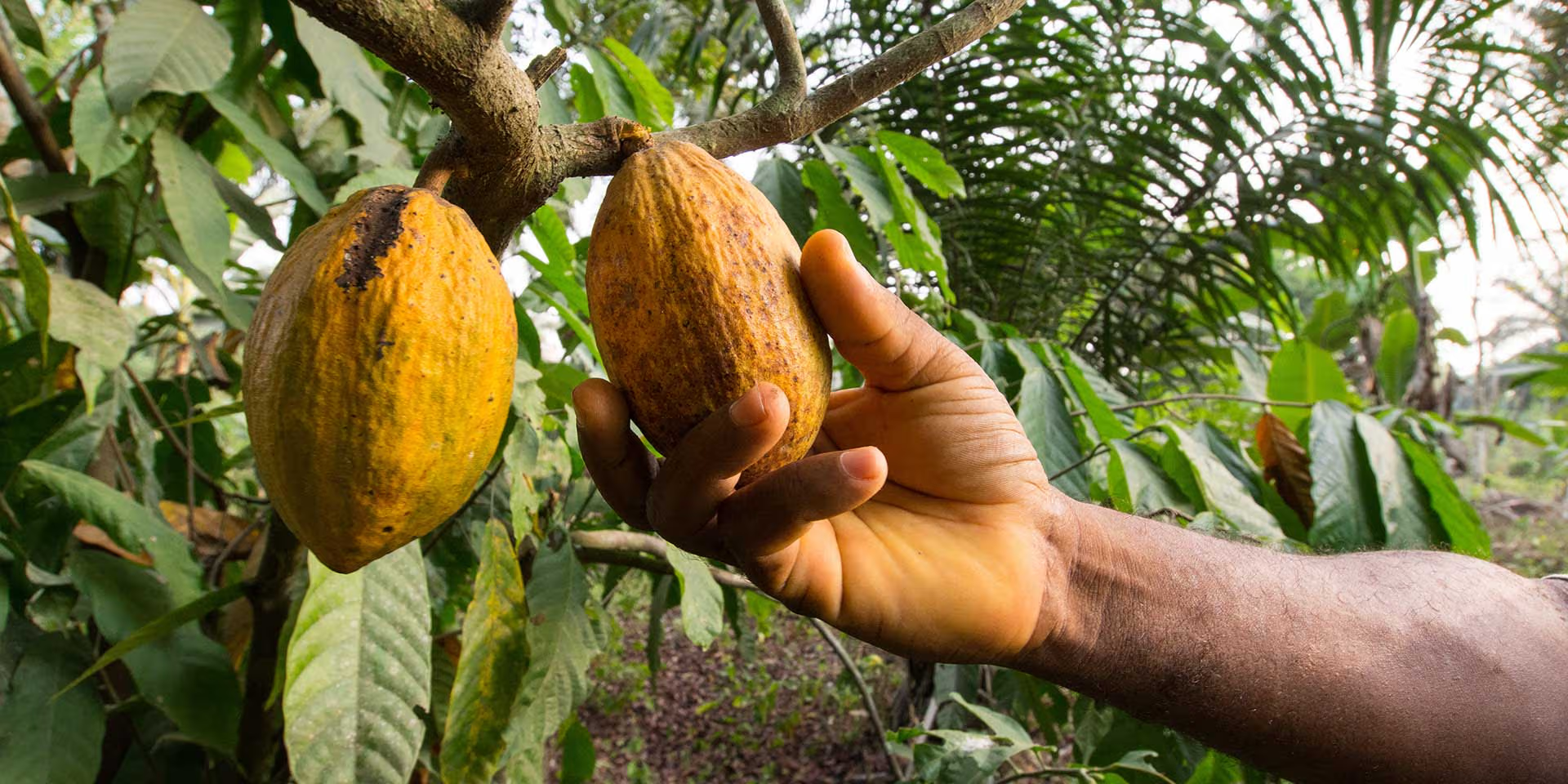
For generations, the rhythm of life in many Ghanaian communities has been intrinsically linked to the cocoa bean. Individuals growing up in regions like Sunyani in the Bono Region, for instance, often recall school vacations spent on family farms in rural areas such as Nsagobesa, where the intricate art of cocoa cultivation was passed down through observation and participation. This deep, generational knowledge of nurturing the cacao plant, from planting to harvesting and fermenting, formed the backbone of a thriving sector. Today, however, that legacy faces unprecedented threats as systemic issues erode the foundations of this vital agricultural heritage.
Political Undercurrents and Policy Gaps
At the heart of Ghana's cocoa predicament lies a labyrinth of political decisions and policy implementation challenges. The Ghana Cocoa Board (COCOBOD), the state institution responsible for regulating the industry, has faced persistent criticism regarding its pricing mechanisms, input distribution, and overall strategic direction. Farmers often lament that the producer price set by COCOBOD, while intended to stabilize incomes, frequently falls short of covering rising production costs, especially when compared to prices offered in neighboring countries.
"The official producer price, while crucial for stability, often doesn't reflect the true cost of farming in an era of climate change and increased input expenses," states Dr. Ama Serwaa, an agricultural economist at the Institute of Statistical, Social and Economic Research (ISSER) at the University of Ghana. "This disparity creates a powerful incentive for illicit activities and discourages reinvestment in farms, fundamentally undermining long-term sustainability."
Critics point to the heavy politicization of COCOBOD's operations, with accusations of appointments based on patronage rather than merit, leading to inefficiencies and a lack of accountability. Subsidies for fertilizers and agrochemicals, though intended to support farmers, are frequently plagued by delays, diversion, and inequitable distribution, leaving many smallholders without essential resources at critical times in the farming cycle. These policy gaps inadvertently create fertile ground for the other destructive forces at play.
The Pervasive Shadow of Greed
Greed manifests in various forms within the cocoa sector, from large-scale smuggling operations to corruption within the supply chain. The allure of higher prices, particularly in neighboring Côte d'Ivoire, fuels a lucrative cross-border illicit trade. Smugglers actively entice Ghanaian farmers to sell their beans across the border, bypassing COCOBOD and depriving the state of crucial export revenues. This phenomenon is particularly prevalent in border regions, where the economic incentive to evade official channels is strongest.
Beyond smuggling, corruption siphons off resources intended for farmers. Reports of diversion of subsidized inputs, such as fertilizers and seedlings, to the black market are not uncommon. Middlemen and unscrupulous officials exploit vulnerabilities in the distribution system, creating artificial shortages and driving up costs for genuine farmers who are then forced to buy these inputs at exorbitant prices. This systemic leakage not only impoverishes farmers but also undermines trust in state institutions.
"It's a daily struggle," recounts Kofi Mensah, a cocoa farmer in the Ahafo Region and a representative of a local farmers' cooperative. "We hear of free fertilizers, but they never reach us. Then, we see them being sold openly in the market at prices we can barely afford. How can we compete when the very system meant to help us is riddled with people enriching themselves at our expense?"
The cumulative effect of this widespread greed is a significant drain on the sector's vitality, discouraging honest labor and promoting a culture of illicit gain that compromises the integrity of Ghana's cocoa brand.
Self-Sabotage: A Slow Erosion from Within
While external pressures and systemic corruption play significant roles, the cocoa crisis is also exacerbated by instances of what can be described as self-sabotage, often born out of desperation. Low returns on investment and a lack of viable alternatives have pushed some farmers to adopt practices that, in the long term, are detrimental to their farms and the environment.
Perhaps the most devastating form of self-sabotage is the encroachment of illegal mining, or 'galamsey,' onto cocoa lands. Lured by the promise of quick wealth, some farmers either sell their cocoa farms to illegal miners or participate in mining activities themselves, irrevocably destroying fertile cocoa lands. The mercury and cyanide used in these operations contaminate water bodies and soil, rendering vast tracts of land unsuitable for agriculture for generations.
Furthermore, a lack of consistent farm maintenance due to financial constraints or aging farmer populations contributes to declining yields. Many cocoa farms are old, with trees past their peak productivity. Replanting efforts are slow, hampered by the high cost of new seedlings and the long gestation period before new trees bear fruit. Without adequate support and incentives, farmers are less likely to invest in modern agronomic practices, pest control, and disease management, leading to a gradual but steady decline in productivity and bean quality.
The intertwining threads of political missteps, insatiable greed, and the desperate acts of self-preservation paint a grim picture for Ghana’s cocoa industry. Addressing this complex cocktail requires a concerted, multi-pronged approach that goes beyond superficial reforms, demanding deep structural changes and a renewed commitment to the welfare of the Ghanaian cocoa farmer. The future of Ghana's golden crop hinges on whether these deep-seated issues can be confronted and effectively resolved.