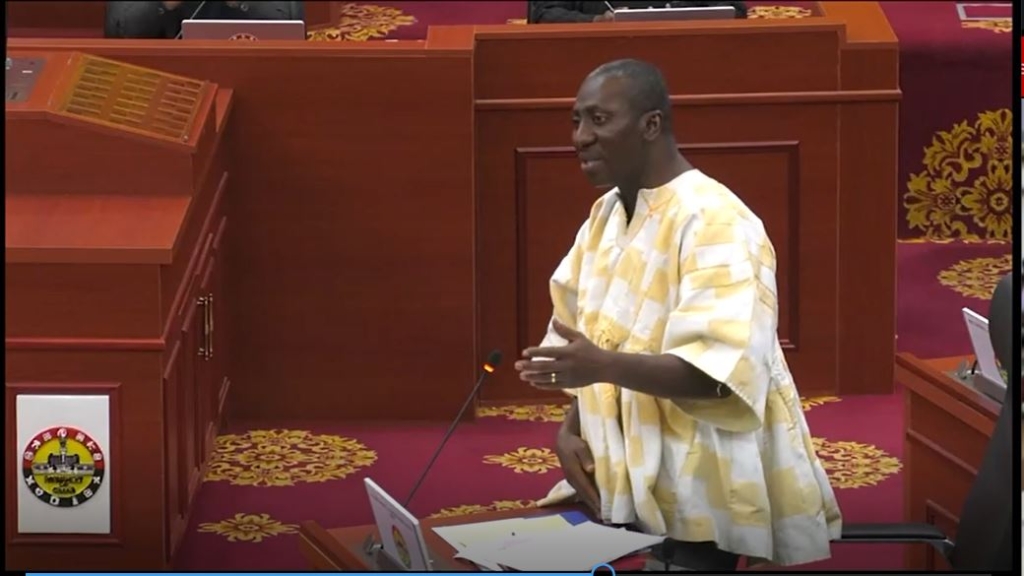
The Minority Leader in Ghana's Parliament, Alexander Afenyo-Markin, has called for the Interior Minister to brief the legislative body on the recent expansion of security recruitment in the country. This demand comes amidst concerns over the ongoing exercise, with many questioning its effectiveness in addressing the nation's security challenges. According to Afenyo-Markin, simply increasing the numbers of those recruited into the security services will not tackle the fundamental issues at play.
The security recruitment expansion has been a topic of discussion in recent weeks, with many Ghanaians expressing their opinions on the matter. Security experts have also weighed in, with some arguing that the move is a step in the right direction, while others believe it is merely a superficial solution. As the debate continues, Afenyo-Markin's demand for a briefing from the Interior Minister highlights the need for transparency and accountability in the process.
"We need to get to the bottom of this recruitment exercise and understand the rationale behind it,"said Afenyo-Markin in a recent interview.
"The Minister must come before Parliament and provide us with the necessary information, so we can make informed decisions."
Background to the Recruitment Expansion
The decision to expand security recruitment in Ghana was announced earlier this year, with the government citing the need to boost the nation's security capacity. The move is seen as a response to the growing concerns over security in the country, particularly in the wake of recent incidents. However, critics argue that the recruitment exercise is being rushed, with some questioning the vetting process and the qualifications of those being recruited. Dr. Kwame Amoah, a security analyst at the University of Ghana, notes that
"the recruitment process must be thorough and transparent, to ensure that only those who are qualified and capable are enlisted into the security services."
As the debate rages on, the Interior Minister's briefing to Parliament is expected to shed more light on the recruitment expansion. The Minister is likely to face tough questions from lawmakers, particularly from the minority side, who are seeking clarity on the exercise. Afenyo-Markin has emphasized that the briefing is not just about providing information, but also about
"ensuring that the rights of Ghanaians are protected, and that the security services are equipped to deal with the challenges facing the country."The Minority Leader's concerns are shared by many, who believe that the recruitment exercise must be carried out in a manner that prioritizes the safety and security of all Ghanaians.
Implications of the Recruitment Expansion
The expansion of security recruitment in Ghana has significant implications for the country's security landscape. On one hand, it is expected to boost the capacity of the security services, enabling them to respond more effectively to security threats. On the other hand, there are concerns that the rush to recruit more personnel could compromise the quality of those being enlisted. Colonel Francis Nunoo, a retired military officer, warns that
"if the recruitment process is not properly managed, it could lead to a situation where unqualified individuals are given weapons and the authority to enforce the law, which could have disastrous consequences."
As Ghana's Parliament prepares to receive a briefing from the Interior Minister, the nation waits with bated breath. The outcome of the briefing will have significant implications for the country's security sector, and the future of the recruitment expansion. The demand by Afenyo-Markin for transparency and accountability is a step in the right direction, as it highlights the need for responsible governance and oversight. In the words of Dr. Amoah,
"the security of the nation is a collective responsibility, and we must all work together to ensure that our security services are equipped to deal with the challenges of the 21st century."
In conclusion, the call by Afenyo-Markin for the Interior Minister to brief Parliament on the security recruitment expansion is a timely intervention. As Ghana continues to grapple with security challenges, it is essential that the nation's leaders prioritize transparency, accountability, and responsible governance. The briefing, expected to take place in the coming weeks, will provide an opportunity for lawmakers to scrutinize the recruitment exercise and ensure that it is in the best interest of the nation. As the country moves forward, one thing is clear: the security of Ghana is a top priority, and all stakeholders must work together to ensure that the nation's security services are equipped to deal with the challenges of the future.