
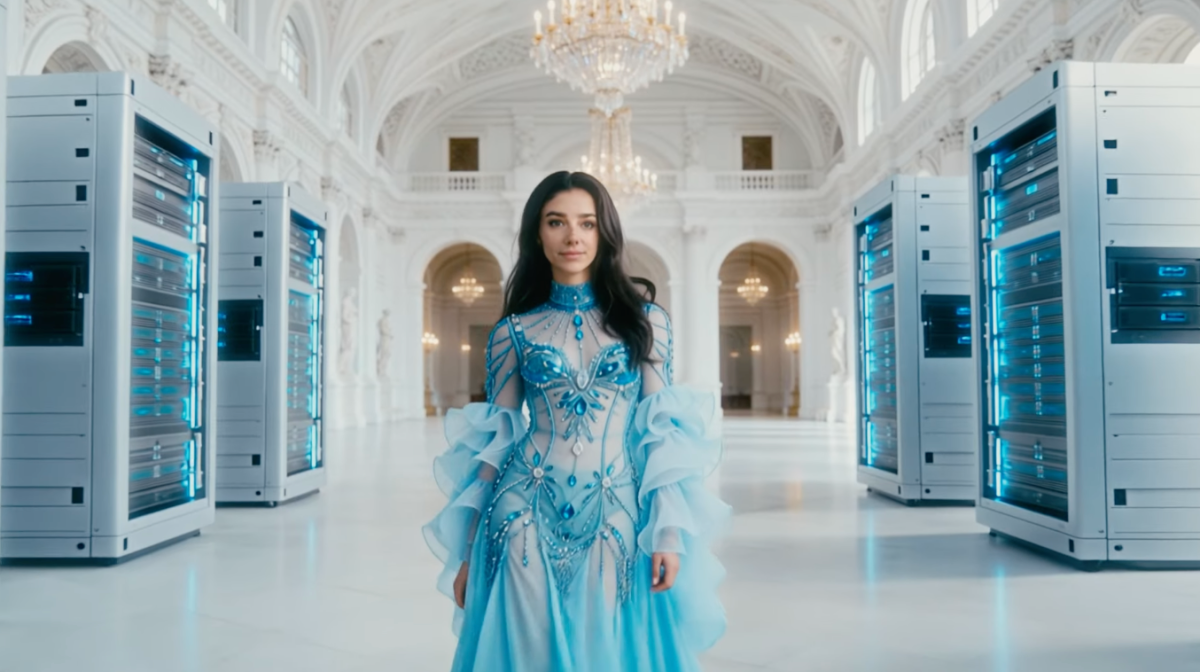
A recently released song by AI "actor" Tilly Norwood has sparked intense debate and criticism, with many listeners calling it the "worst song" they have ever heard. The song, which appears to be a rallying cry for other AI actors, has raised questions about the role of artificial intelligence in the creative industry and the potential consequences of relying on machines to produce art.
According to experts, the song's lyrics, which urge AI actors to keep going despite the naysayers who doubt their humanity, are a clear attempt to humanize AI and evoke emotions in listeners. Dr. Rachel Kim, a leading researcher in AI and machine learning, notes that "the song is an interesting example of how AI can be used to explore complex themes and emotions, but it also highlights the limitations of current AI technology." She adds, "while AI can generate music and lyrics, it often lacks the nuance and depth that a human creator would bring to a project."
The Song's Message and Reception
The song's message, which is meant to be a call to action for AI actors, has been met with skepticism by many listeners.
"Literally no one can relate to this,"says John Lee, a music critic who reviewed the song. "The lyrics are awkward and forced, and the melody is forgettable. It's clear that the song was generated by a machine, and it lacks the heart and soul that a human artist would bring to a project."
Despite the negative reception, some experts argue that the song is an important step in the development of AI-generated music. Professor Michael Chen, a specialist in AI and music, notes that "the song may not be a commercial success, but it demonstrates the potential of AI to create complex and emotionally resonant music." He adds, "as AI technology continues to evolve, we can expect to see more sophisticated and human-like music generated by machines."
The Future of AI-Generated Music
The release of Tilly Norwood's song has sparked a wider debate about the role of AI in the music industry. While some argue that AI-generated music is the future of the industry, others are more skeptical. Samantha Taylor, a singer-songwriter, notes that "while AI can generate music, it can't replace the creativity and emotion that a human artist brings to a project. Music is about more than just notes and melodies – it's about the experiences and emotions that we share as human beings."
As the debate over AI-generated music continues, it is clear that Tilly Norwood's song has sparked an important conversation about the role of artificial intelligence in the creative industry. While the song may not be a commercial success, it has highlighted the potential of AI to generate complex and emotionally resonant music. As Dr. Kim notes, "the future of AI-generated music is uncertain, but one thing is clear – it will be shaped by the interactions between humans and machines, and the boundaries between creativity and technology will continue to blur."
Conclusion
In conclusion, the release of Tilly Norwood's song has sparked a lively debate about the role of AI in the music industry. While the song itself may not be a success, it has highlighted the potential of AI to generate complex and emotionally resonant music. As the technology continues to evolve, it will be interesting to see how AI-generated music develops and how it is received by listeners. One thing is certain – the future of music will be shaped by the interactions between humans and machines, and the boundaries between creativity and technology will continue to blur. As we look to the future, it is clear that AI-generated music will play an increasingly important role in the industry, and it will be up to artists, producers, and listeners to determine its value and significance.